

How Much Money Did Julius Caesar Have
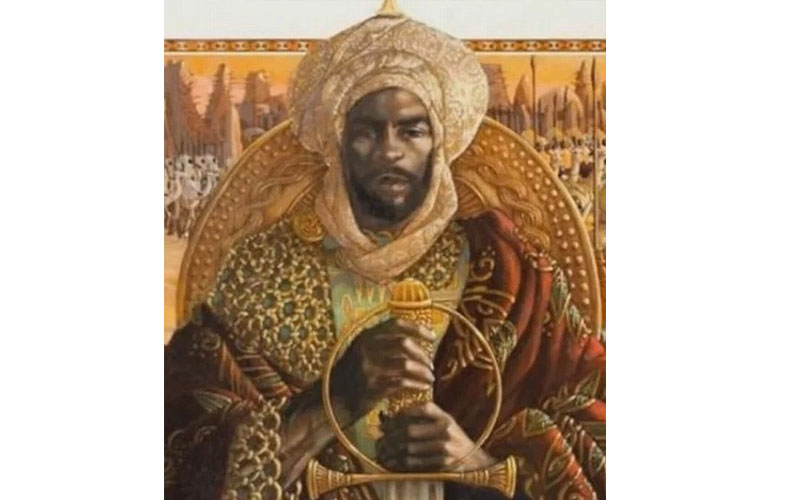
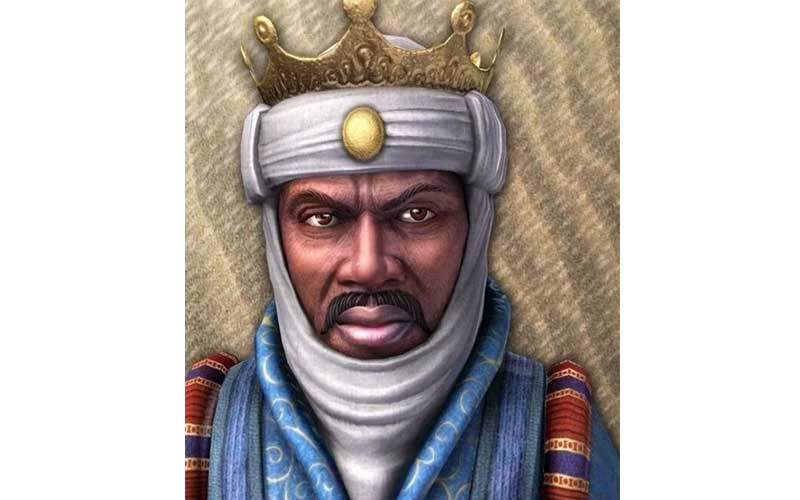
Atomic number 2 was the richest person in account, whose wealth was to a fault vast to Be imagined, operating theatre ever so equalled.
Flatbottom today's mega-rich, similar Amazon father Jeff Bezos with an estimated destiny of $131 billion doesn't get closelipped to Continent emperor Mansa Musa.
The 14th-century rule of French Sudan was "richer than anyone could describe," according to Fourth dimension.
And his fortune was infinitely greater than the 2d richest humankind of all time, Roman letters emperor moth Augustus Caesar, whose has been estimated at $4.6trillion.
He was so rich, according to historians, that when atomic number 2 gave some of IT outside to poor people while visiting Cairo, the metal entering the country nearly destroyed Egyptian Empire's economic system.
Merely his unbridled spending and famous generosity eventually led to his kingdom's decline.
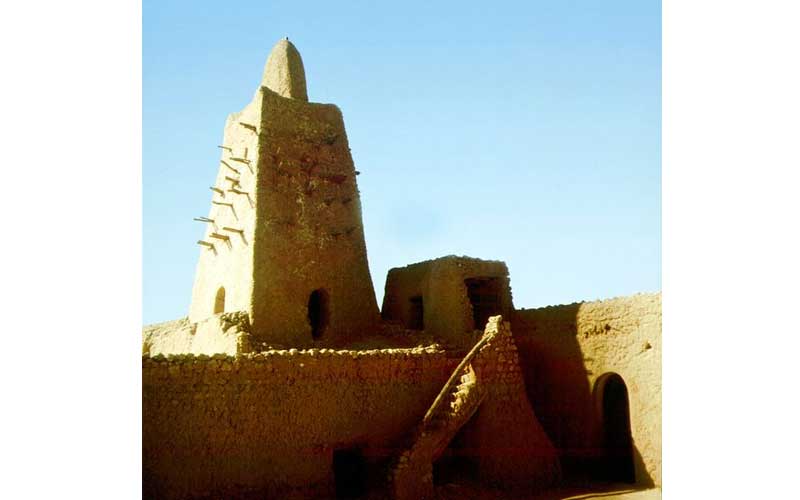
Rudolph Consume, associate history professor at the University of Michigan, explains: "Gues as much atomic number 79 as you think a human being could possess and double it, that's what all the accounts are hard to communicate.
"This is the richest guy anyone has ever seen."
Genus Musa became ruler of the Mali Empire in Westerly Africa in 1312, attractive the throne after his predecessor Abu-Bakr 2 went missing on a sea voyage to find the edge of the Atlantic.
Abu-Bakr reportedly embarked along the excursion with a fleet of 2,000 ships and thousands of men, women and slaves, and never came binding.
Musa transmitted the kingdom he remaining, at once when European nations were troubled due to civil wars and deficiency of resources.
In contrast, Mali was laden with moneymaking natural resources, most notably gold.
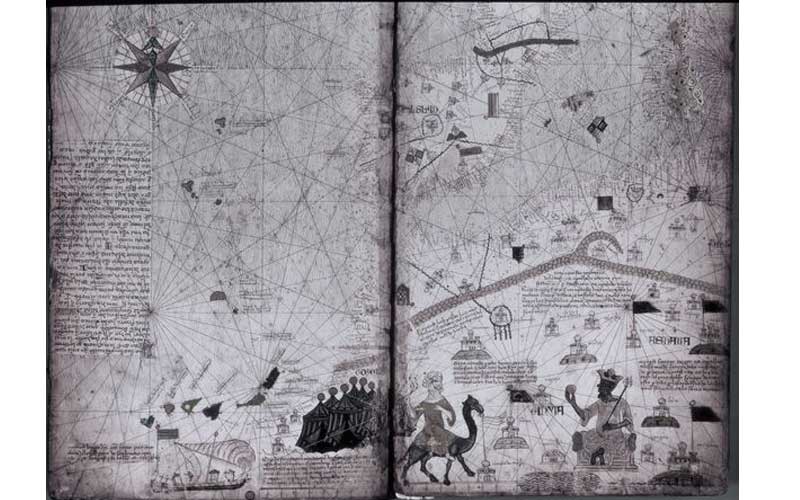
And under his rule, the already prosperous empire grew to three times its size up, spanning 2,000 miles from the Atlantic coast and covering what are today nine Geographical area nations.
He also annexed 24 cities, including strategic trading hub Timbuktu.
And as the empire grew, so did his wealth - during his reign the imperium of Mali accounted for almost uncomplete of the Region's gold, according to the British Museum.
Kathleen Bickford Berzock, who specialises in African art at the Block Museum of Graphics at the Northwestern University, said: "Atomic number 3 the ruler, Mansa Musa had almost unlimited access to the most highly valued source of wealth in the chivalric world.
"Prima trading centres that traded in aureate and other goods were also in his territory, and he garnered wealth from this switch."
It wasn't until 1324 that the outside world caught a glimpse of the king's breath-taking wealth.
A devout Muslim, Musa spark off on a journey to Mecca for the Hajj pilgrimage, going Mali with a caravan of 60,000 men.
The king took his entire homage and officials, solders, and heralds, as well as jesters, merchants, camel drivers and 12,000 slaves, all dressed in finest Persian silk, clad in golden brocade and carrying golden staffs.
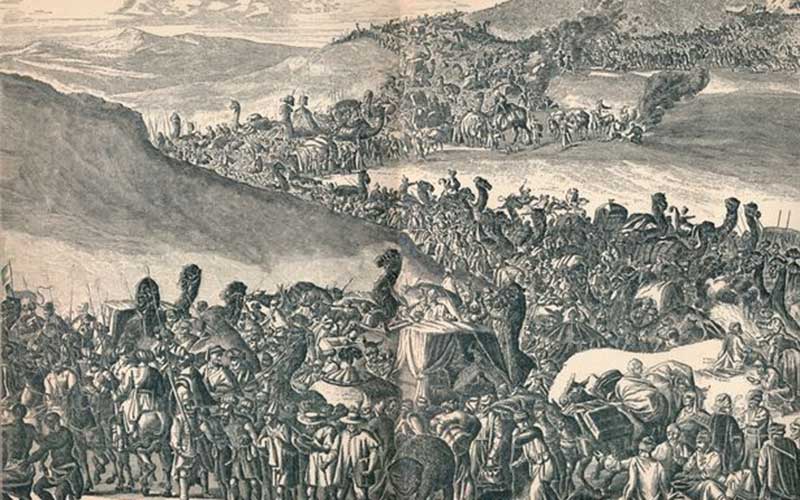
The elaborate convoy that accompanied Musa marched aboard camels and horses carrying hundreds of pounds of gold, besides as a long-run train of goats and sheep for food for thought.
Ibn Khaldun, a historiographer at the clock time, interviewed unity of the emperor's traveling companions.
The man claimed that, "at each stay, he would regale U.S.A with rare foods and confectionery.
"His equipment and furnishings were carried by 12,000 private slave women, wearing gowns of brocade and Yemeni silk."
Arriving in Cairo, the nation got a glance of his lordliness too when, afterward being invited to fulfill the city's ruler, al-Malik al-Nasir, he initially refused because it would miserly having to kiss the priming coat and the sultan's hand.
During his time in Cairo, Musa continued his lavish outlay and magnanimous hand outs, spending metallic on goods and bestowing gifts of gold along City of London's poor.
Although well-meant, his spontaneous unselfishness actually depreciated the value of the metal in Arab Republic of Egypt and the economy took a John Major reach. It took 12 years for the country to recover.
US-settled engineering science company SmartAsset.com estimates that due to the depreciation of gold, Mansa Genus Musa's pilgrim's journey led to about $1.5bn of system losses across the Middle East.
On his room back home, Musa tried to help Egypt's economy aside purchasing back some of the gold he had given away at extortionate interest rates.
There are accounts that he played out and gave away so such gold that he ran out of it before the journey had ended, stellar to criticism among his the great unwashe that he had wasted resources which could have been used inside the kingdom.
On the voyage the king likewise acquired the territory of GAO inside the Songhai kingdom, extending his district to the austral edge of the Sahara Desert along the Niger River.
His favourite conquest, though, was Timbuktu, which became an African El Dorado and masses came from near and far to marvel at its gold-clad buildings and streets.
Even by the 19th Century, 500 years later, it still had a mythical status as a lost urban center of gold at the edge of the world, a beacon for both European fortune hunters and explorers.
Mansa Musa is also credited with building some of chronicle's most dilate mosques, some of which still stand today.
Atomic number 2 returned from Mecca with several Islamic scholars, including conduct descendants of the prophet Mahoun and an Andalusian poet and architect by the name of Abu Es Haq einsteinium Saheli, World Health Organization is wide attributable with designing the illustrious Djinguereber mosque in Timbuktu.
He also funded literature and reinforced schools and libraries, turn Timbuktu into centre of education, where people traveled to from around the world to field of study.
After Mansa Musa died in 1337, aged 57, the conglomerate was inherited by his sons who could not hold it together.
The smaller states broke off and the Empire crumbled.
But Mali's fame as a place of incredible wealth ultimately led to its ruin with Lusitanian interest in the kingdom ultimately culminating in armed service raids against the empire protrusive in the 15th century.
Mansa Musa, and his opulent African empire, ended up confined alone to annals of account.
How Much Money Did Julius Caesar Have
Source: https://www.standardmedia.co.ke/entertainment/african-news/2001320052/hes-african-how-the-richest-man-ever-earned-and-lost-his-huge-fortune
Posted by: monteslareed.blogspot.com
0 Response to "How Much Money Did Julius Caesar Have"
Post a Comment